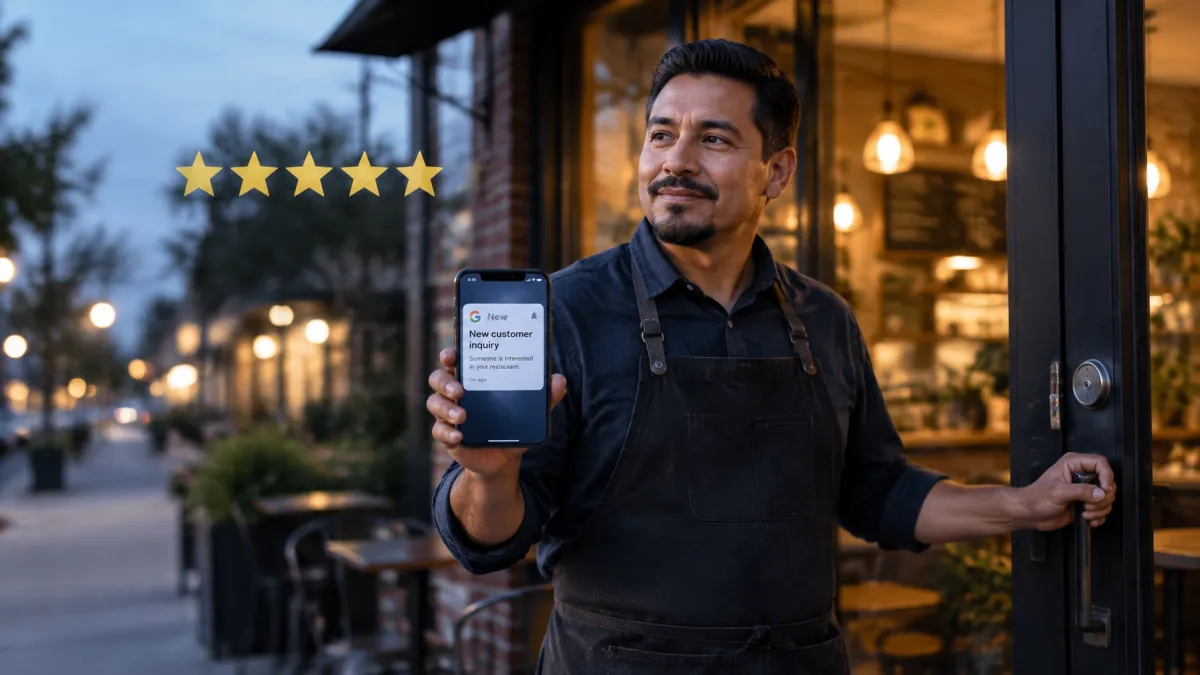
The 9 PM Lead: What Happens When Someone Contacts You After Hours
At 9 PM, a potential customer fills out your form.
Or calls your business.
Or sends a message after finding you online.
You are not at your desk. You may be closing up, driving home, eating dinner, or getting ready for bed.
That is normal.
But what happens next can decide whether you win the job, or lose it to the next business on Google.
The after-hours gap is real.
Evenings, weekends, early mornings, and holidays are common times for people to search, compare, and reach out. They may finally have time to think about a repair, book a service, schedule an appointment, or ask for a quote.
If your business stays silent, the lead keeps moving.
Often, they contact someone else.
What does the 9 PM lead actually experience?
Let’s walk through the customer’s side.
They reach out while the need is fresh
A homeowner notices a leak after dinner.
A parent remembers to schedule an appointment once the kids are in bed.
A customer searches for a contractor on Saturday morning.
A restaurant guest wants to reserve a table for the next day.
They call or fill out your form because the need is active right now.
They are not always willing to wait until tomorrow.
They hear voicemail, or nothing
If you do not answer, the caller may hear a generic voicemail message.
If they submit a form, they may see a small confirmation page.
Then they wait.
That waiting period feels longer to the customer than it feels to you.
They may wonder:
Did the business receive my message?
Is anyone going to call me back?
Should I contact another company?
Can I get help sooner somewhere else?
Most people do not want to chase a business. They want a clear next step.
They contact the next business
The customer opens another search result.
They call a competitor.
They send a message to someone who responds right away.
The first business to reply may not be the cheapest. It may not even be the best fit.
It simply showed up first.
That is the cost of the after-hours gap. You may have already paid for the website visit, the ad, the listing, or the referral. But the lead still disappears because no one responded when the customer was ready.
Why speed matters after business hours
A reply the next morning can be too late.
By then, the customer may have:
Booked with another provider
Received three quotes
Solved the problem another way
Forgotten which businesses they contacted
Decided not to respond at all
This is especially common for urgent or competitive services.
A customer with a broken water heater does not want a list of companies to call tomorrow. They want to know who can help.
A customer looking for a consultation may book with the first business that makes the process easy.
A customer with a question may choose the company that simply says, “We received your message. Here is what to do next.”
Fast communication builds trust before you ever speak with the customer.
That does not mean you need to answer every call at 9 PM.
It means your business needs a helpful response ready to go.

What does a simple after-hours system do?
A good system does not try to replace your business.
It handles the first steps while you are away. Then it puts the conversation in front of you when you are ready.
Here is what that looks like.
1. It sends an instant text-back reply
When a call is missed or an inquiry comes in, the customer receives a quick, friendly message.
For example:
> “Hi, this is [Business Name]. We saw that you reached out. How can we help? You can reply here, or choose a time that works for you: [booking link].”
The message is simple.
It confirms that the customer was not ignored.
It keeps the conversation open.
It gives them a clear next step.
Learn more about instant text-back replies for missed opportunities.
2. It keeps the message in one place
After-hours inquiries should not be scattered across voicemail, email, social media, and a notebook.
A connected system brings the message into one organized view.
You can see:
Who contacted you
When they reached out
What they asked for
Whether they replied
Whether they booked
What follow-up is still needed
This saves time the next morning.
You do not have to search through five apps to understand what happened overnight.
You can open one place and see the full customer story.
3. It gives the customer an easy way to book
A customer may not want to wait for a phone call.
They may be at work. They may be caring for a child. They may be comparing options late at night.
A self-service booking link lets them choose an available time without going back and forth.
That means your calendar can keep working even when you are not.
The customer chooses a time.
You receive the appointment.
No extra phone tag.

4. It follows up the next morning
The first reply is important. The next morning matters, too.
Your system can remind you to follow up with the customer. It can also send a helpful message if the person has not replied or booked yet.
For example:
> “Good morning. We wanted to follow up on your message from last night. Are you still looking for help with [service]?”
This keeps the lead warm without making you remember every detail.
You start the day with a clear list instead of a pile of unanswered messages.
What if the lead calls instead of texting?
Some customers prefer to speak with a person.
That is where an AI receptionist that answers calls 24/7 can help.
It can answer common questions, collect the customer’s details, and help them book an appointment.
You can keep your existing business number while giving customers a way to reach someone after hours.
This is useful for businesses where phone calls drive sales, including:
Home service companies
Contractors
Medical and dental offices
Realtors
Repair businesses
Salons and wellness providers
Professional service firms
You do not need a large call center.
You need a simple system that responds clearly and sends the right information to the right place.
Does automation make the customer experience less personal?
Not when it is set up well.
Bad automation creates confusion. It sends long messages, asks too many questions, or makes customers feel trapped.
Good automation feels like a quick welcome.
It answers the basic question:
“Did anyone receive my message?”
Then it gives the customer control.
They can reply. They can book. They can wait for a call. They can share more details.
You still take over when a personal conversation is needed.
The system simply protects the lead until you are available.
What should your after-hours message include?
Keep it short.
Your message should include:
Your business name
A confirmation that the message was received
A simple question or reply option
A booking link when appropriate
A clear expectation for the next response
Avoid promising an immediate personal call if you cannot provide one.
Instead, be direct:
> “We received your message. Our team will follow up during business hours. If you would like to choose a time now, you can book here: [link].”
Clear beats clever.
The goal is not to write a perfect message. The goal is to stop the customer from wondering what happens next.
How do you know if the system is working?
Track a few simple numbers:
How many calls come in after hours
How many inquiries receive an instant reply
How many customers respond
How many appointments are booked
How many leads need personal follow-up
How many inquiries are still waiting
You do not need a complicated report.
You need visibility.
When you can see after-hours activity, you can make better decisions about staffing, scheduling, advertising, and follow-up.
For more practical ideas, visit the Smart Systems Marketing insights blog.

Start this week: a simple checklist
You do not need to rebuild your whole business.
Start with the gap that costs you the most.
This week, check these five things:
Call your business after hours. What does a customer hear?
Submit your website form at night. Does anyone confirm receipt?
Check your social messages. Are inquiries sitting unanswered?
Add a simple booking link. Can customers choose a time without calling?
Set a next-morning follow-up reminder. Who owns the response?
If the answer is “nothing happens,” that is your first system to build.
An automatic reply can protect the lead.
A booking link can turn interest into an appointment.
One organized inbox can stop messages from getting lost.
A morning follow-up can turn an overnight inquiry into a real conversation.
You do not have to work all night to capture after-hours business.
You need the right response working quietly in the background.
Smart Systems Marketing can help you set up simple systems that capture leads, reply quickly, organize conversations, and keep your calendar moving, even when you are off the clock.
